Water treatment
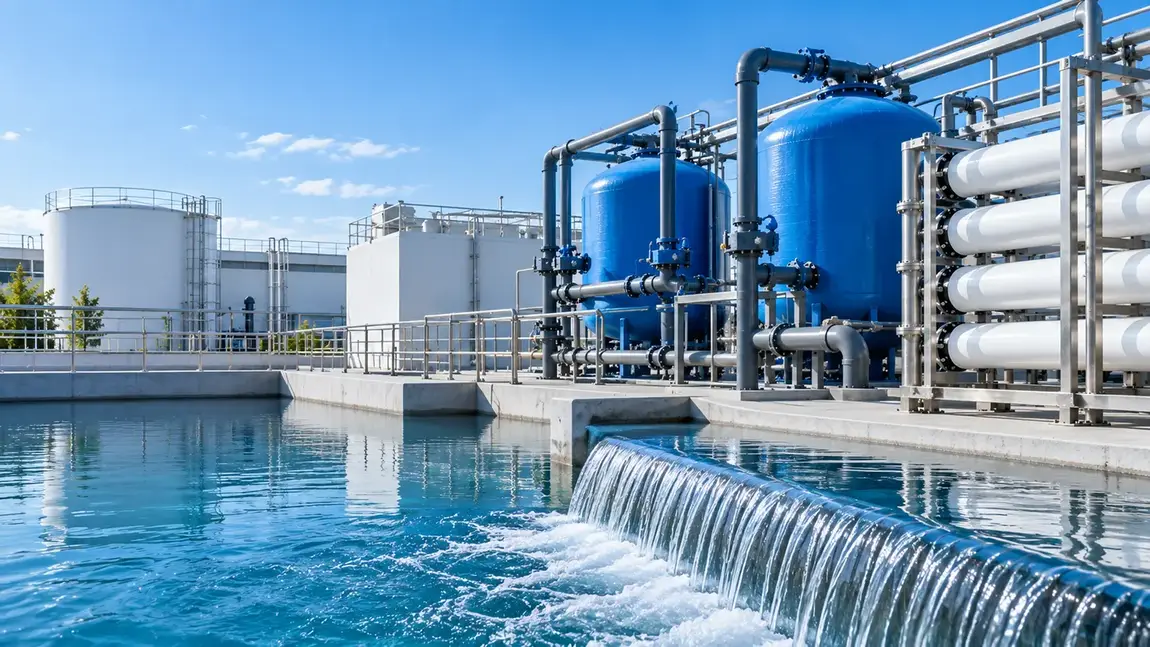
Intake, screening, filtration and conditioning of raw water before it reaches a process, a boiler, or a reverse osmosis train — the mechanical and chemical steps that protect downstream equipment, not the downstream process itself.
| Parameter | Value |
|---|---|
| Typical capacity range | Sized to the downstream process — from a few m³/day for laboratory or utility water to several thousand m³/day for boiler feed and process water |
| Pre-treatment approach | Coarse screening at intake, followed by media or self-cleaning filtration; softening or dealkalisation added where boiler feed is the target |
| Achievable performance | Turbidity reduced below 1 NTU ahead of RO or ion exchange, consistent with standard membrane and resin manufacturer feed limits |
| Egyptian feed-water challenge | Nile-sourced surface water carries seasonal turbidity and algae loading that a fixed-rate filter underperforms against during flood season |
| Design response | Filtration rated to the flood-season turbidity peak, not the annual average, with coagulant dosing adjusted seasonally rather than fixed |
Filtration sized to an annual-average turbidity figure is the single most common undersizing mistake on Nile-sourced intakes — the design has to hold at the flood-season peak, not the number that looks good on a yearly average.