Industrial wastewater
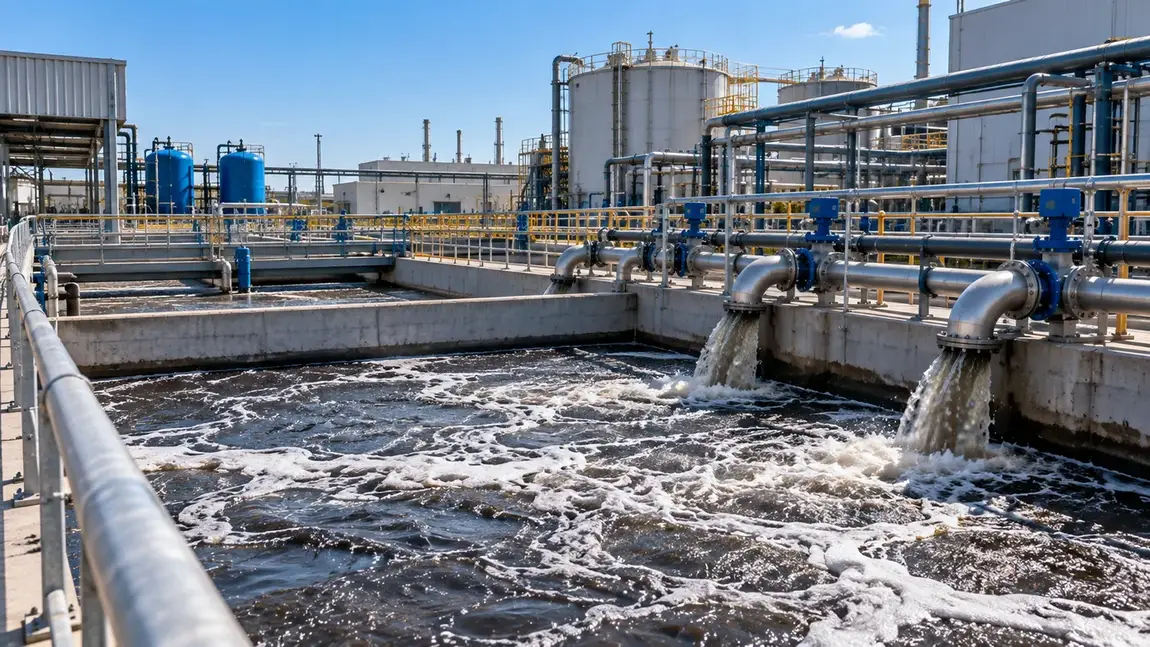
Wastewater treatment scoped to a specific industrial process stream rather than a generalised municipal-style train — food and beverage, petrochemical, and heavy industry effluents each pose a different design problem.
| Parameter | Value |
|---|---|
| Typical capacity range | From under 200 m³/day for a single production line to several thousand m³/day for a multi-line site |
| Pre-treatment approach | Oil/grease separation and screening for food and beverage effluent; equalisation and pH neutralisation ahead of biological treatment for most other industrial streams |
| Achievable performance | COD/BOD and oil-and-grease reduced to within the site's discharge permit limits, with the design target set by that permit rather than a generic benchmark |
| Egyptian effluent challenge | High-salinity or high-temperature process effluent, common in food processing and petrochemical sites, inhibits standard biological treatment |
| Design response | Effluent cooling and/or salinity dilution ahead of biological stages where required, or a physicochemical-only train where biological treatment isn't viable at the effluent's actual temperature and salinity |
The discharge permit is the design target here, not a generic treatment benchmark — a train built to a textbook COD reduction figure can still fail compliance if the permit's actual limits are stricter, or pass with unnecessary cost if they're looser.